Tim Sent

AI · Agentic Systems · Enterprise Architecture · Robotics

Driven by insatiable curiosity, I lead the development of Agentic AI business models through the discipline of Enterprise Architecture. I build intelligent systems that augment human capability and explore how software and physical AI converge.

About

Curious builder of agentic and physical AI

I lead the development of agentic AI business models through the discipline of Enterprise Architecture, building intelligent systems that augment human capability. My work extends from multi-agent architectures built on MCP and A2A to embodied AI, where Agentforce reasoning meets NVIDIA and Cobalt robotics in simulation.

I lead a team of AI experts, strategists and technologists who partner with the world's leading AI companies to bring the future into the present. I also teach what we learn, from enabling 1,600 Solutions Engineers on prompt engineering and agents to running hands-on workshops for customers and partners.

Volunteering is in my DNA. As a programming mentor for FIRST Robotics Team 5199, I have given more than 1,000 hours to helping students write software, build vision systems and think like engineers, so they can shape what comes next.

🤖

Physical AI & Robotics

Perception, planning, and control systems bridging digital intelligence with the physical world.

ROS Isaac Sim Isaac Lab Omniverse Cosmos Computer Vision Sensor Fusion
🧠

Agentic AI & LLMs

Building LLM-powered agents with System 2 reasoning, tool use, and reliable decision-making.

LLMs VLMs RAG Claude Agentforce MCP A2A Multi Agent Architectures
🏗️

Enterprise Architecture

Designing operating models and architectures that scale intelligent systems across organisations.

Capability Mapping Roadmaps Gap Analysis Cloud Edge AI System Design Value Map
🔬

Multimodal AI

Working with vision-language models and multimodal reasoning for both enterprise and robotics contexts.

VLMs Real-Time Systems Multimodal RAG Video Search & Summarization

Certifications & Learning

Continuous learning

Certifications

Salesforce Certified Distinguished Architect · Certified Enterprise Architect · Certified AI Specialist · Certified AI Associate · Certified Data Cloud Consultant · Certified Platform Administrator II · Certified Platform Administrator · Certified App Builder · Certified Force Developer · Accelerate Leadership Program
Anthropic Claude Certified Architect · Claude Certified Associate · Claude Certified Developer

Amazon Certified Machine Learning Specialty · AWS Certified AI Practitioner · Certified Cloud Practitioner
NVIDIA NVIDIA AI Infrastructure and Operations · NVIDIA Generative AI LLMs · Agentic AI

Courses

Anthropic AI Fluency for Builders · AI Fluency: Framework & Foundations · Building with the Claude API · Claude 101 · Claude Code 101 · Claude Code in Action · Claude With Google Vortex AI · Claude With Amazon Bedrock · Introduction to Agent Skills · Introduction to Model Context Protocol · Introduction to Subagents · Model Context Protocol: Advanced Topics · Teaching AI Fluency
Trailhead All Star Ranger · Agentblazer Innovator (FY27) · Agentblazer Champion (FY27) · Agentblazer Legend (FY27)
Superbadges Advanced Flow for Agentforce · Apex for Agentforce · Agentforce for Service · Prompt Builder Templates · Lightning Experience Rollout
Continuing Education MIT AI & Machine Learning · Stanford Machine Learning · Harvard CS50 Artificial Intelligence · TOGAF Enterprise Architecture · Great Learning AI/ML Mentor
Research & Leadership

Focus areas

My work focuses on designing intelligent systems that integrate enterprise software, AI agents, multimodal models, and robotics into cohesive operating models.

01
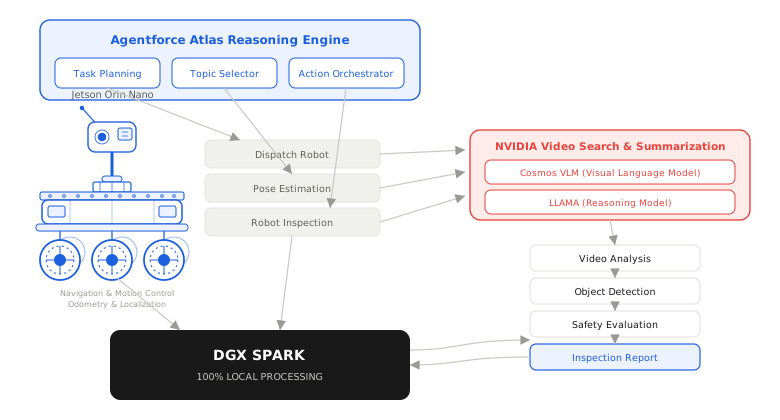
Robot Safety Inspector system architecture diagram

I extend Agentforce's Atlas Reasoning Engine into embodied AI, pairing NVIDIA's perception stack and visual language models with Cobalt's mobile robot platform.

The result is a Robot Safety Inspector proof of concept in which Atlas orchestrates autonomous room inspections for safety equipment, running fully local on DGX Spark. See the architecture →

02
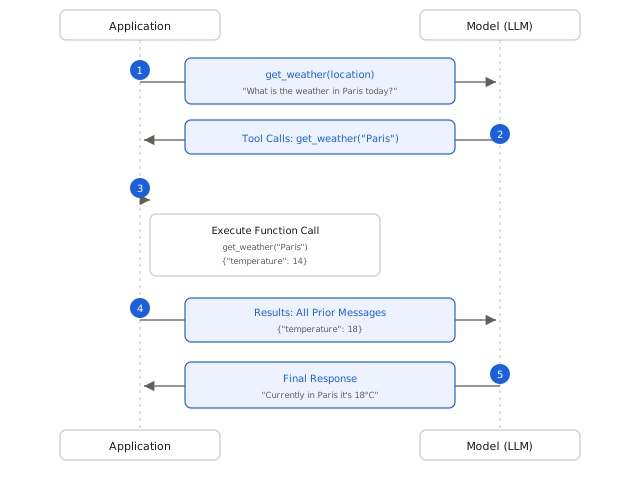
Tool calling sequence diagram from Multi-Agent Collaboration

I trace the path from function calling to Agent2Agent, in the order the field actually built it, starting with OpenAI's tool calling and LangChain's work standardizing it across providers. From there I cover Mixture of Experts and Mixture of Agents, and how frameworks like LangGraph, CrewAI, MetaGPT, and AutoGen each let multiple agents collaborate.

I then cover Anthropic's Model Context Protocol and Google's Agent2Agent Protocol: what each one standardizes and why the two work together rather than compete. Read the deck →

03
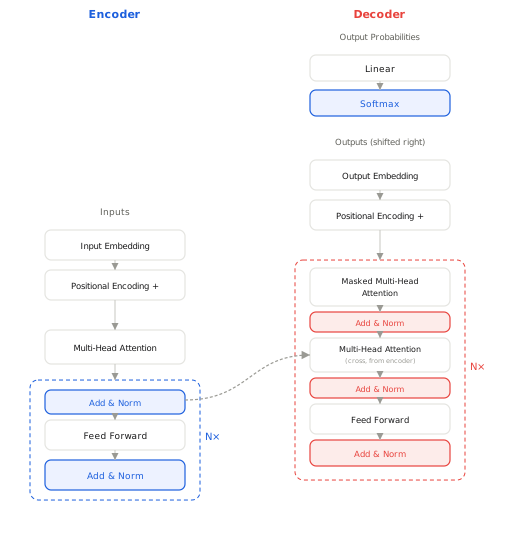
Transformer architecture diagram from Why Not Build an LLM?

I make the case for Retrieval-Augmented Generation over training a proprietary LLM from scratch. I walk through the cost curve behind frontier models, from hardware and energy to cloud rental and staff, and why language models have grown so quickly in size. I also trace the history of deep learning from the perceptron to the transformer era, including word embeddings, LSTMs, self attention, and BERT.

I cover the datasets and benchmarks the field trains and evaluates against, BloombergGPT as a finance focused example, and the RAG and vector database architecture that makes pretrained models ready for the enterprise without a training bill in the hundreds of millions of dollars. Read the deck →

04
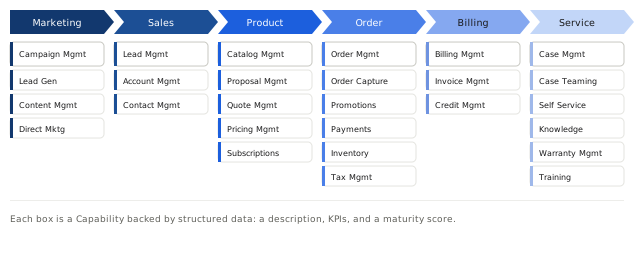
Architect360 Capability Map for order management, built on the Salesforce Platform

I built Architect360, an application native to the Salesforce Platform, to model Capabilities as structured data instead of static boxes, so a Capability Map carries real, measurable metrics.

I cover the Prioritization Matrix and Strategic Roadmap built from that same data, and how architects across 35 countries use it to drive digital transformation. Read the article →

05
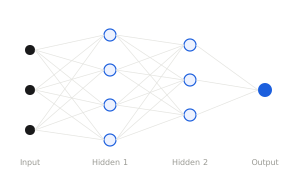
Neural network diagram from The Language of Machine Learning

I put together a working vocabulary for machine learning, starting with what separates Artificial General Intelligence from the narrow systems we build today, then the three families of learning problems.

I cover regression, classification, the core algorithms and cost functions, and neural network fundamentals, plus the resources I recommend. Read the deck →

06
Enterprise AI Architecture Designing operating models that allow organisations to adopt and scale intelligent systems reliably.
07
Vision Language Models and Multimodal AI Applying VLMs to perception, reasoning, and action across robotics and enterprise settings.
08
Physical AI and Robotics Architecture Designing the systems and abstractions that make robots intelligent at scale.

Tech & Tools

AI / ML LLMs · VLMs · Agent Frameworks · RAG
Robotics ROS · Isaac Simulation · Sensor Fusion · OpenUSD · Computer Vision Calibration
Architecture Enterprise Architecture · System Design
Platforms Cloud · Edge AI · Real-Time Systems

Volunteering & Mentorship

Giving back

Volunteering is a core part of who I am. I believe the future is built through both technology and mentorship — and that supporting the next generation of engineers is as important as building the systems themselves.

FIRST Robotics & Team 5199

As a programming mentor for FIRST Robotics Competition (FRC) Team 5199, The Robot Dolphins From Outer Space, I developed and taught a structured curriculum covering coding principles, robot control systems, and advanced topics like AI-driven vision tracking.

A defining moment came when we migrated to a modern, command-based framework and introduced computer vision systems that unlocked full autonomous operation — rebuilding the entire codebase around structured, reusable patterns that scale season over season instead of resetting with each graduating class.

Standing with Team 5199 at the FIRST Championship, watching students operate under the pressure of the world's largest robotics stage — calm, coordinated, and confident — is the clearest proof that the programming culture we built together is durable and self-sustaining.

1,000+
Volunteering hours
logged with Salesforce
350+
Students benefited from my
volunteer work
#1
Salesforce volunteering
leaderboard ranking

FIRST Robotics Competition volunteer roles

At FIRST Robotics Competition events I volunteer in four roles, each one helping teams compete safely, fairly, and with confidence. See all FIRST volunteer roles →

Robot Inspector

I check that every robot meets the technical and safety rules before it competes. The role blends engineering, clear communication with students, and rule enforcement to keep gameplay fair and safe.

Control System Advisor

I help teams troubleshoot and resolve robot control and technical issues, working directly with students so they get and stay competition ready.

FIRST Technical Advisor

I oversee the technical operation of the competition field, supporting teams, resolving field and robot control issues, and working with volunteers and staff to keep the event safe and on schedule.

Judge

I interview and observe teams, recognizing their achievements and offering encouragement and constructive feedback that helps inspire the next generation of STEM leaders.

Connect

Let's talk

I'm always happy to discuss AI, robotics, enterprise architecture, or interesting problems at the frontier. Find me on any of the channels below.